Bulging Disc vs. Herniated Disc
Bulging discs and herniated discs represent distinct stages of spinal disc deterioration, each with different implications for treatment and recovery. Understanding the difference between these two conditions is essential for making informed decisions about your care.
Dr. Rojeh Melikian, an award-winning, fellowship-trained spine surgeon in Southern California with training at Harvard and Emory, provides individualized treatment plans based on accurate diagnoses and proven clinical outcomes.
What Is the Difference Between a Bulging Disc and a Herniated Disc?
To understand the difference between these two conditions, it helps to know the anatomy of a spinal disc. Think of a disc like a gel-filled cushion between your vertebrae, with a tough outer shell called the annulus fibrosus, and a soft inner core called the nucleus pulposus.
Bulging Discs
A bulging disc occurs when the outer shell weakens and protrudes outward, similar to a weakened tire that bulges under pressure. The outer layer remains intact, but the disc extends beyond its normal position. This is a common sign of aging and degenerative disc disease (DDD). A bulging disc does not automatically mean you need surgery. When symptoms do occur, they typically manifest as localized neck or back stiffness, often worse in the morning.
Herniated Discs
A herniated disc, also called a slipped or ruptured disc, is more severe and involves a structural tear. In this case, the outer shell develops a tear, and the inner gel leaks out, compressing spinal nerves and often triggering inflammation. Because this gel is highly inflammatory, a herniated disc is more likely to cause serious pain and more severe symptoms than a bulging disc, potentially affecting your ability to work, sleep and engage in daily activities.
Bulging disc symptoms are often mild or nonexistent. Herniated discs can be asymptomatic or cause symptoms that vary depending on nerve involvement. You may experience sharp, shooting pain that radiates down your arm or leg, along with numbness, tingling and muscle weakness. A herniated disc in the lower back is the most common cause of sciatica.
Yes, a bulging disc can progress to a herniated disc. Over time, or due to trauma such as heavy lifting, the weakened outer shell can tear. Early evaluation and proactive care from a spine specialist may help prevent progression.
Finding the Right Solution
There is a wide range of treatments for disc herniation. Treatment for a bulging or herniated disc begins with nonsurgical options like physical therapy, activity modification and anti-inflammatory medications.
Many patients recover with conservative care alone. However, if conservative care does not provide relief or if you develop muscle weakness, surgery may be the best path to reclaim your quality of life.
Advanced Minimally Invasive Spine Surgery
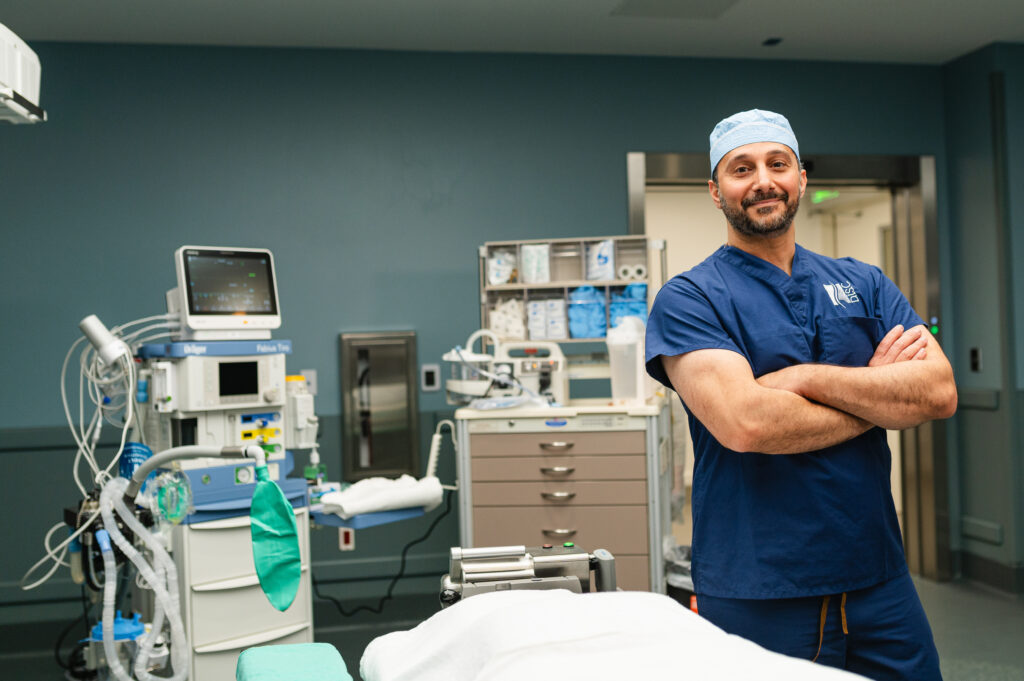
Dr. Melikian offers microdiscectomy, the most common minimally invasive surgery (MIS) for symptomatic herniated discs. This procedure is designed to provide long-term relief for radicular leg pain caused by lumbar disc herniation.
Procedures are approached using microscopic or endoscopic techniques, often taking less than one hour per level. Most patients walk within hours of surgery and go home the same day. Dr. Melikian’s zero MRSA infection rate to date, award-winning achievements and training at Harvard and Emory give you confidence in your care.
Schedule Your Spine Consultation
An accurate diagnosis is the first step toward lasting pain relief. As a trusted Los Angeles spine surgeon, Dr. Rojeh Melikian provides individualized care from his offices in Marina del Rey and Newport Beach. Call 949-806-6946 or complete our online scheduling form to book an in-person, phone or video consultation today.