Sciatica
When burning, shooting pain radiates from your lower back through your leg, it can disrupt sleep and limit movement, turning everyday activities into overwhelming challenges. Sciatic nerve pain can affect more than your physical comfort, potentially impacting your ability to work, care for your family and participate in the activities that give your life meaning.
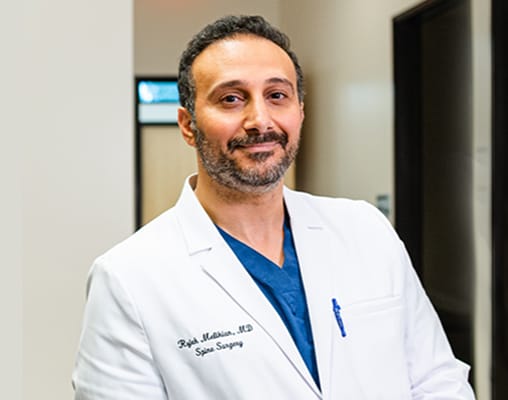
Sciatica is not a condition you have to live with. Dr. Rojeh Melikian, an award-winning, fellowship-trained spine surgeon with Harvard and Emory credentials, provides individualized sciatica treatment to help you improve your quality of life.

Endoscopic vs. Traditional Microdiscectomy
Traditional lumbar microdiscectomy requires larger incisions and involves cutting or stripping the spinal muscles to access the herniated disc, which increases recovery time. Endoscopic microdiscectomies use a high-definition endoscope, allowing Dr. Melikian to access the herniated disc through a natural pathway without cutting muscle.
This muscle-preserving approach makes endoscopic techniques one of the least invasive options available. While both approaches relieve nerve pressure, the endoscopic method significantly reduces post-operative surgical pain by preserving muscle integrity.
What Is Sciatica?
Sciatic nerve pain refers to discomfort that follows the path of the sciatic nerve, which runs from your lower back through your hips and down each leg. The electric-shock sensation traveling from your lower back through your buttocks and down your leg signals nerve compression.
Lumbar radiculopathy, the clinical term for this radiating discomfort, occurs when pressure on nerve roots creates pain that disrupts sitting, standing and sleeping. You’re not alone in experiencing the frustration of restricted movement from severe sciatica, and there are steps you can take.
Dr. Melikian’s expertise in minimally invasive procedures delivers definitive solutions. With a zero MRSA infection rate maintained through rigorous protocols, his practice is dedicated to both results and your safety.


What Causes Sciatica Symptoms?
Sciatica symptoms signal a compressed or pinched nerve in your lower spine, where irritation or pressure on the nerve root triggers the radiating pain you experience. A herniated disc is a common trigger for sciatica, and occurs when the soft inner core pushes through the tough outer layer and compresses nerve roots. Spinal stenosis is another common cause among older adults, developing when the spinal canal narrows due to bone spurs or ligament thickening.
Diagnosing Severe and Chronic Sciatica
Understanding what’s causing your pain is the first step toward relief. During your comprehensive exam, we evaluate muscle strength and reflexes. Dr. Melikian performs tests to help identify which nerve roots are under compression. MRI and CT scans can also pinpoint the exact location, enabling a treatment plan tailored to your condition.

How to Treat Sciatica Conservatively
The best treatment plans for sciatica often begin without surgery, and many patients find significant relief through conservative approaches. For example, physical therapy can help by building core strength that reduces pressure on compressed nerves. Anti-inflammatory medications and targeted epidural injections can also help in some cases by reducing acute swelling around irritated nerve roots, creating a window for natural healing and therapeutic progress.
When Does Sciatica Require Surgery?
If sciatica won’t go away after attempting conservative treatment, we’ll discuss surgical options. Progressive leg weakness or sudden loss of bowel or bladder control represents a medical emergency.
Minimally Invasive Sciatica Surgery Options
Traditional minimally invasive microdiscectomy is the gold standard for removing compressive disc fragments. Through a one-inch incision using microscopic visualization, Dr. Melikian can remove only the herniated portion.
For eligible patients, endoscopic microdiscectomy offers an even more advanced approach, typically allowing patients to walk within hours and return home the same day. This ultra-minimally invasive technique prioritizes muscle preservation and accelerated recovery.
Protecting Your Spine After Recovery
Once you’ve found relief from sciatica, you can take steps to support your spine’s long-term health. Dr. Melikian and our team will provide guidance on activities and lifestyle choices that help protect your back.
Staying active with low-impact exercises like swimming and walking strengthens the muscles that support your spine, reducing stress on your discs. Maintaining a healthy weight also decreases the mechanical load your lower back carries daily. Every patient’s situation is different, and Dr. Melikian will work with you to create a personalized plan that fits your lifestyle and goals.
Schedule Your Spine Consultation Today
We’re ready to partner with you on your journey to long-term sciatica relief. Call 949-806-6946 or schedule an appointment online today. You can visit one of our Southern California locations or choose a virtual phone or video consultation.